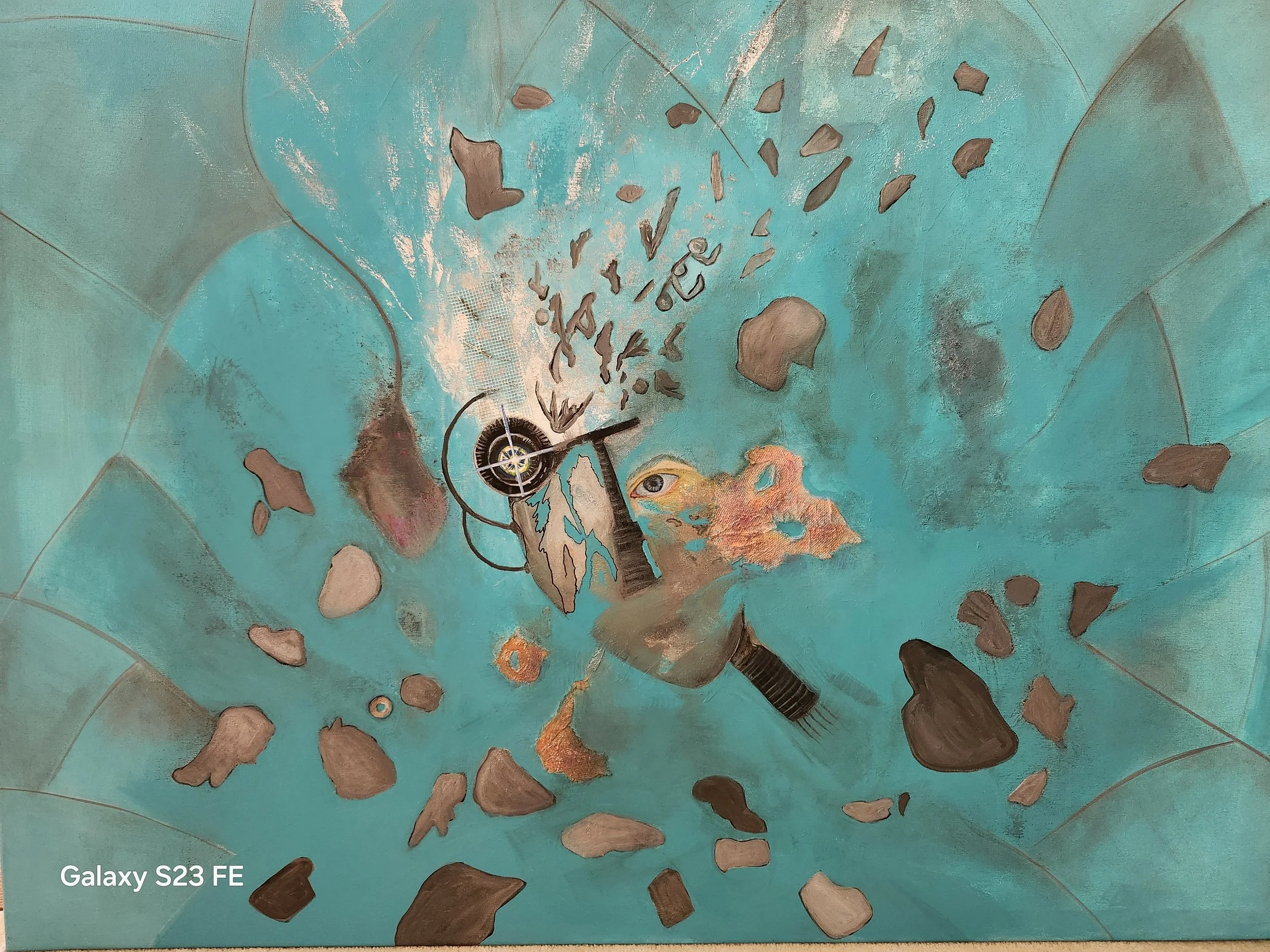
Transhumanism considers a future in which the desire to transcend the limitations of the human body may ultimately transform what it means to be human.
As organic existence is progressively replaced by mechanical and digital elements, the distinction between human being and constructed intelligence begins to dissolve. The work does not ask whether technological evolution is possible, but something more unsettling: at what point does the pursuit of human advancement become the abandonment of our humanity?
The painting inhabits that uncertain threshold between evolution and disappearance—between the human being we recognize today and the possibility of something fundamentally different taking its place.
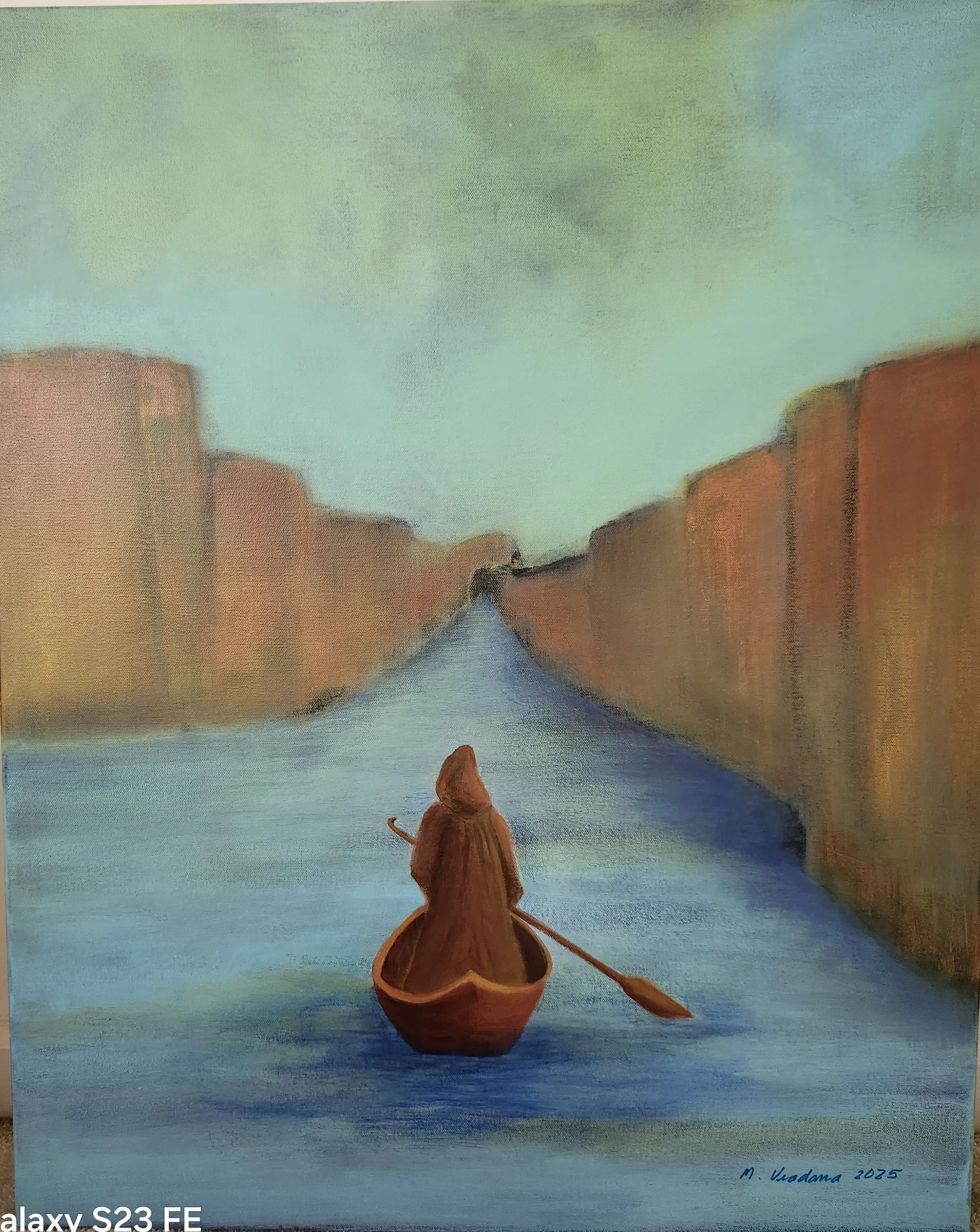
Acrylic gallery-wrapped 30×24
Venice has long existed in the imagination as a place of color, movement, beauty, romance, and extraordinary human creation. In My New Venice, that familiar world has changed.
Beauty remains, but certainty has disappeared.
The painting reflects a contemporary world shaped by war, political transformation, economic instability, and the growing sense that what once appeared permanent may no longer be so. Light and darkness coexist, transforming Venice into a psychological landscape—beautiful and recognizable, yet mysterious and increasingly uncertain.
My New Venice asks whether beauty can remain untouched by the world surrounding it—or whether even our most cherished places inevitably become mirrors of their time.
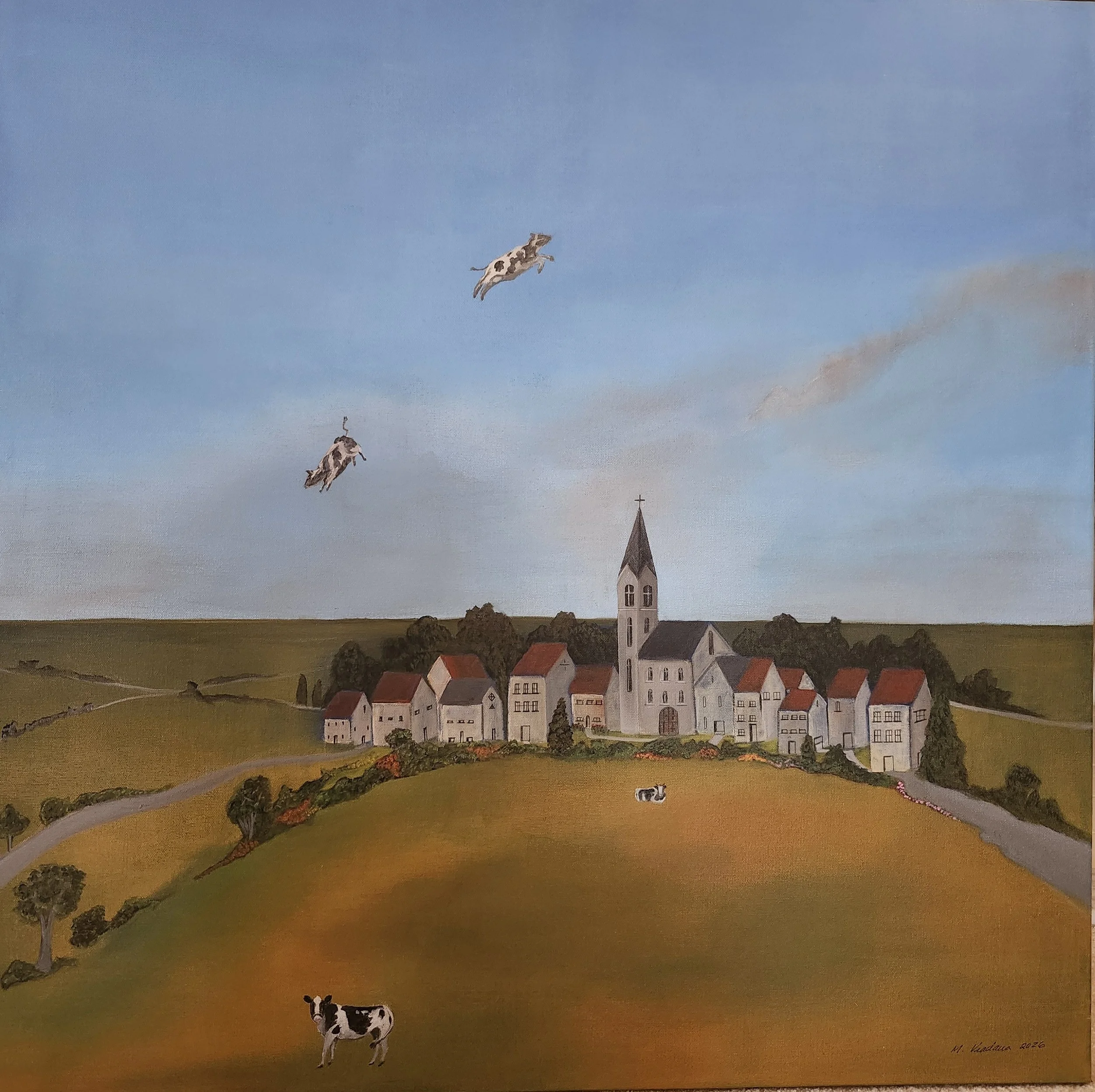
Wonder Awaits inhabits the space between what is possible and what we have yet to imagine.
Within the boundaries of ordinary reality, there are things we accept as impossible. We cannot simply take flight. We cannot escape every limitation imposed upon us. And yet, through imagination, we continually travel beyond those boundaries.
The painting considers dreaming not as an escape from reality, but as a way of expanding it.
Every possibility begins somewhere—in a thought, a longing, an image of something that does not yet exist. What we imagine may remain a dream, or it may become the first movement toward something we eventually make real.
Wonder Awaits invites us to remain open to that uncertain space where imagination encounters possibility.
Perhaps we cannot always fly in the way we dream.
But without dreaming of flight, we may never discover how far we can go.
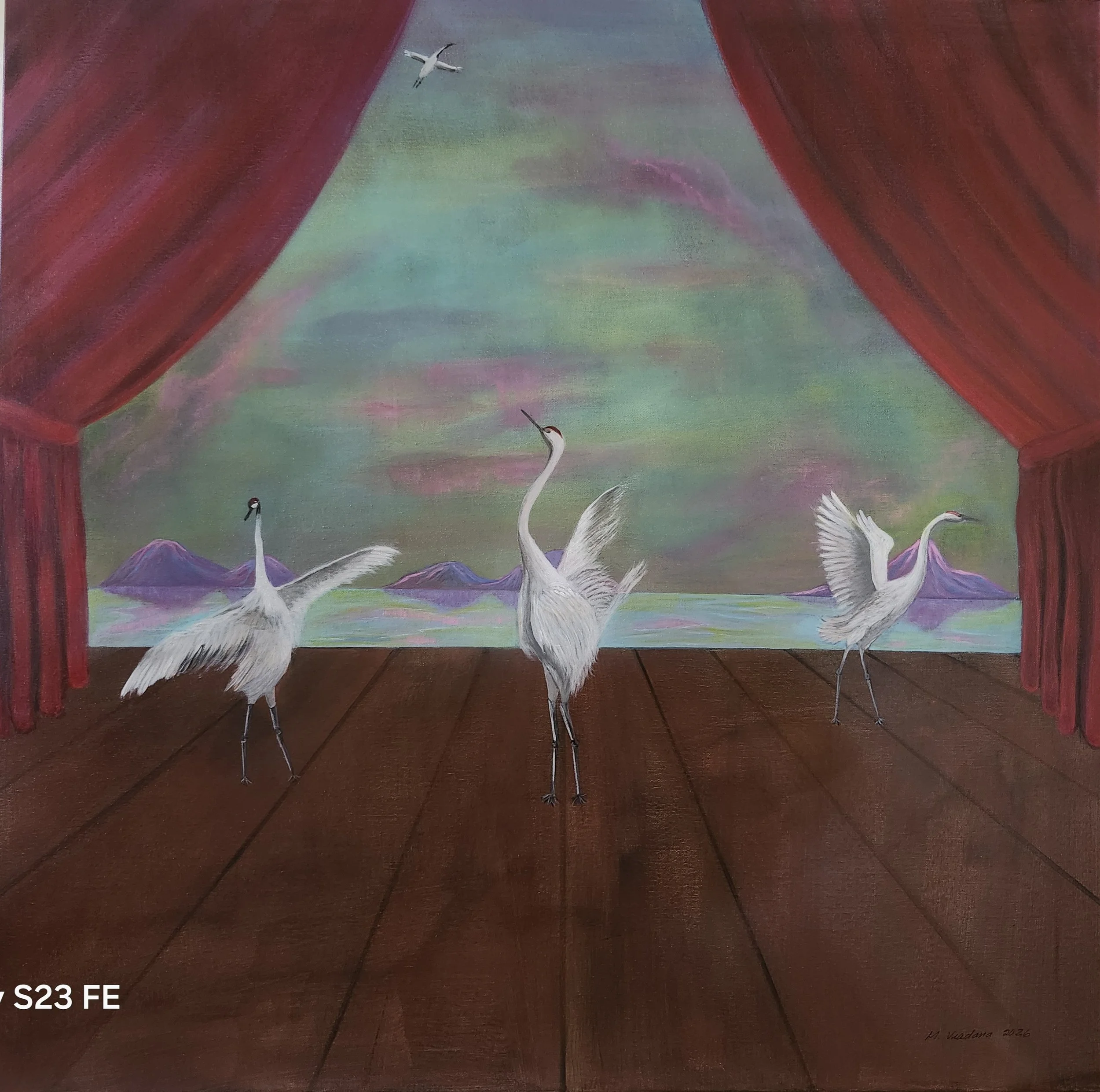
In When White Cranes Dream, white cranes are given something nature never provided them: a stage.
Their natural elegance becomes performance as they move through a theatrical space created especially for them. Yet the cranes are not imitating human dancers. Instead, the painting reverses the relationship: their movement reminds us that grace existed in the natural world long before we gave it a name.
The stage becomes an offering—a place where these living beings can be witnessed not as background to human existence, but as protagonists of their own beauty.
Perhaps the cranes are dancing.
Perhaps they are dreaming.
Or perhaps we are finally paying attention.
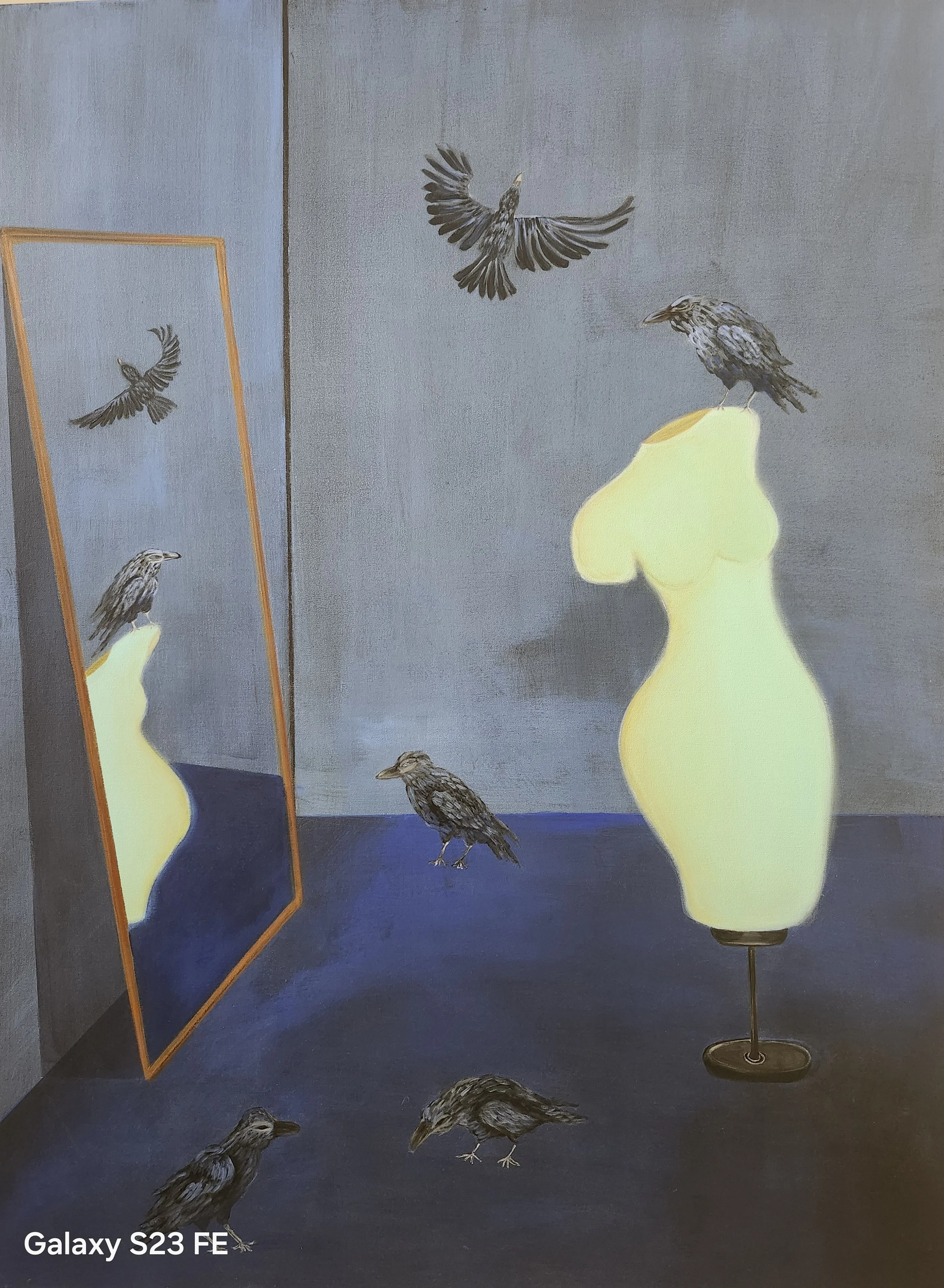
What confirms that we have existed?
In Existence, an abandoned mannequin occupies a silent interior while a mirror becomes the witness to its presence. Yet the reflection is deliberately imperfect.
The discrepancy raises a question about human existence itself: Are we ever perceived exactly as we are?
Our existence is witnessed by others—by people, memories, encounters, and experiences—but every witness sees us through a different consciousness. Like the mirror in the painting, those reflections may contain us without ever reproducing us completely.
The ravens become companions to this existence: events and presences that enter our lives, share our time, and become part of the evidence that we were here.
The mannequin remains.
The mirror remembers.
But neither can tell us with certainty what was real.
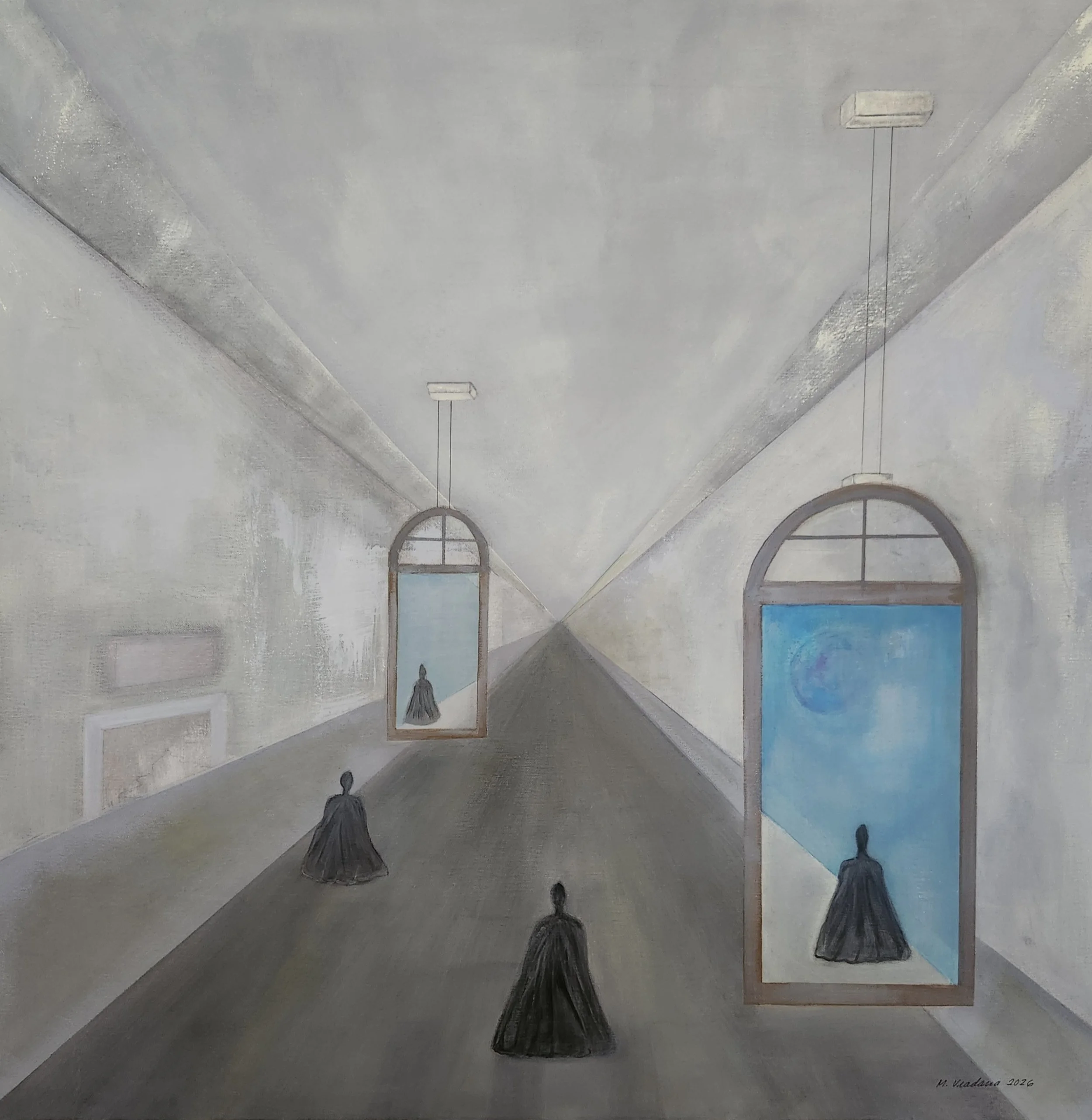
Quantum Theory explores the invisible nature of reality and the limits of human perception. At the quantum level, matter and energy behave in ways that challenge our ordinary understanding of the physical world.
The painting invites us to consider that existence may contain realities we cannot directly perceive, reminding us that the boundaries of human perception are not necessarily the boundaries of what exists.
What we cannot see is not necessarily what is not there.
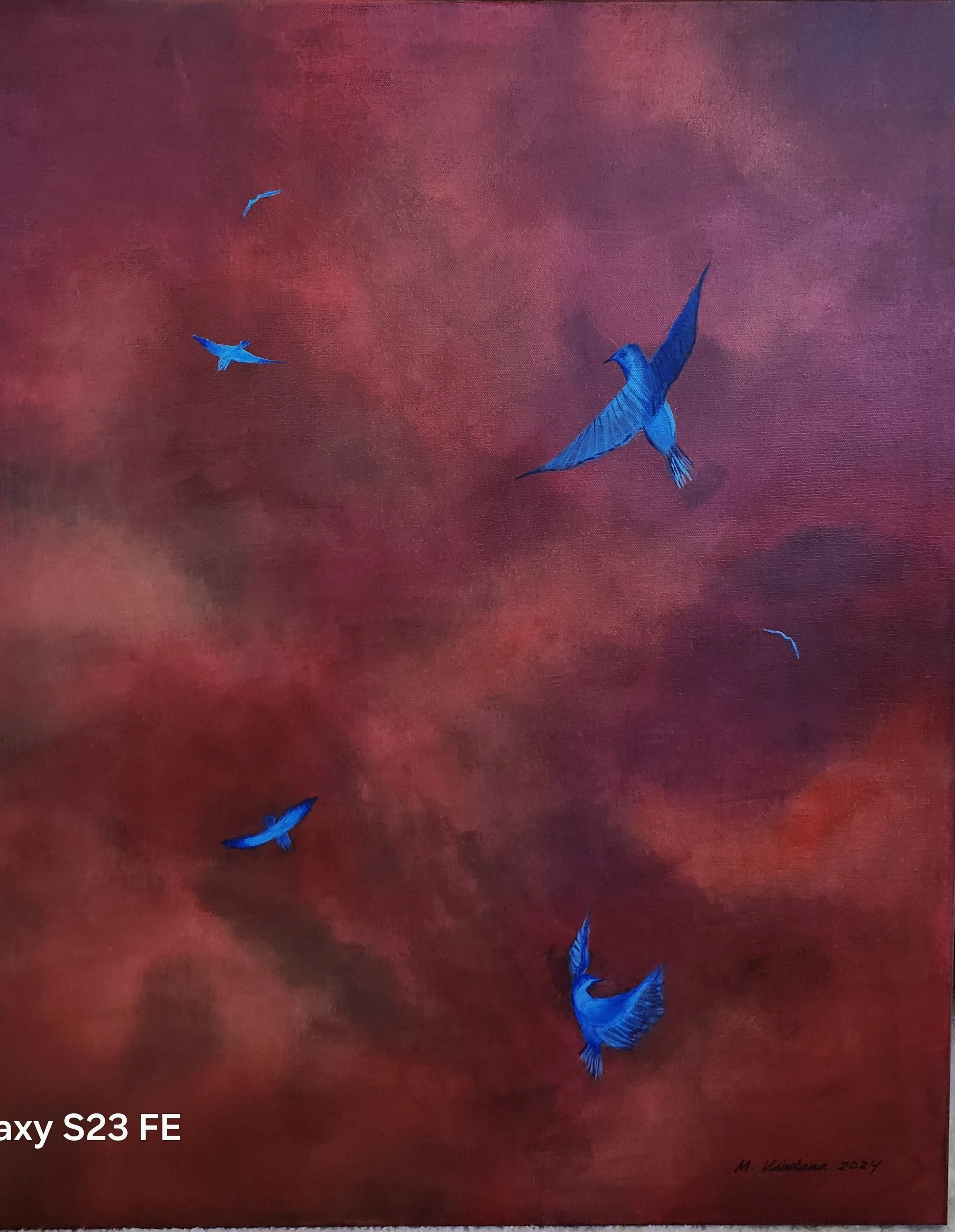
Against an intensely red and turbulent world, blue birds continue to fly.
The landscape evokes a planet increasingly defined by heat, fire, and environmental instability. Yet the birds remain in motion—small living presences crossing an atmosphere that has become uncertain.
Their flight is neither an escape nor a promise that everything will be restored. It is simply life continuing within disruption.
The contrast between the fragile blue birds and the heated world surrounding them asks us to consider the vulnerability of creatures living through transformations they did not create.
And still, they fly.
No results match your search. Try removing a few filters.