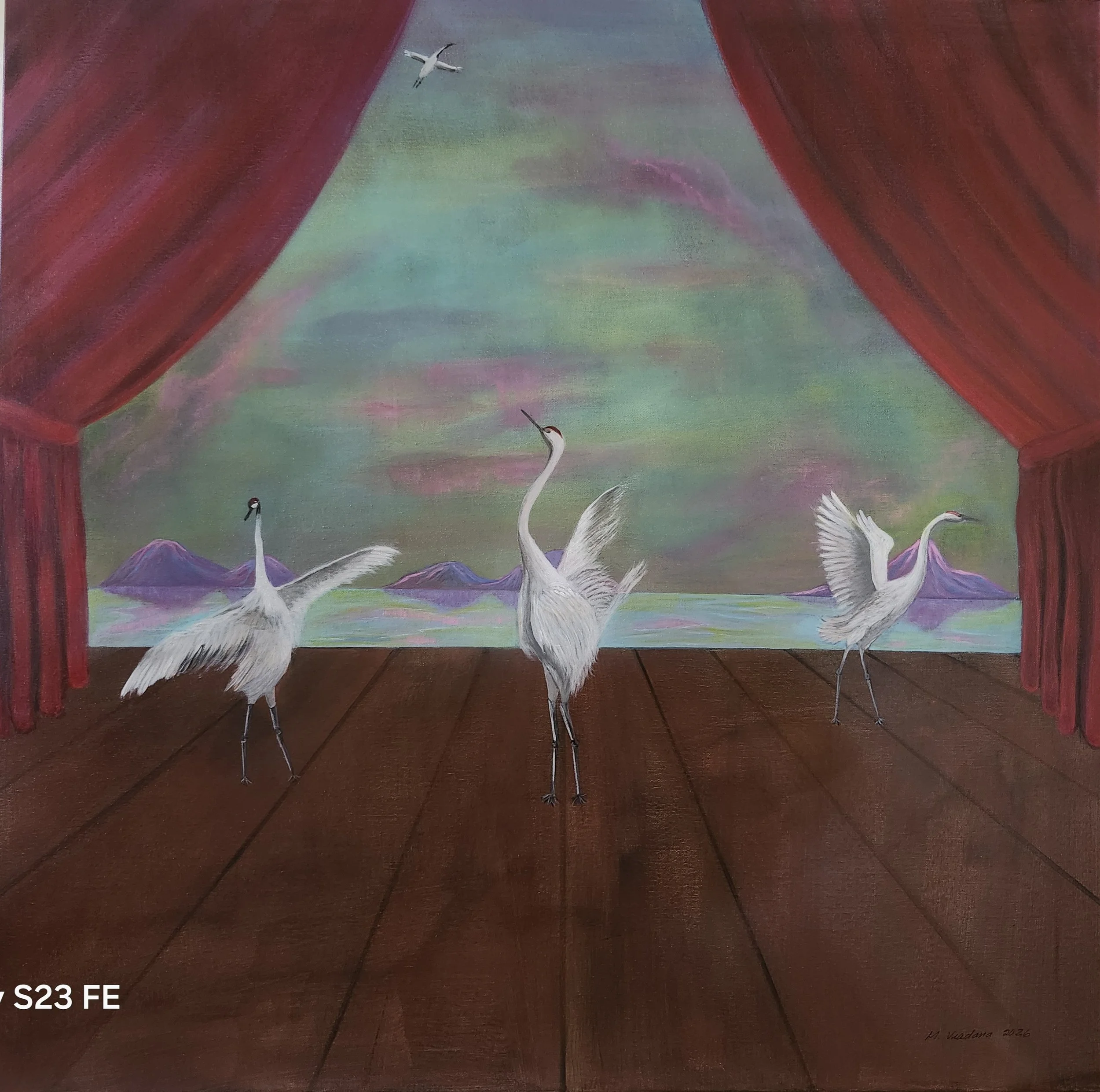
In When White Cranes Dream, white cranes are given something nature never provided them: a stage.
Their natural elegance becomes performance as they move through a theatrical space created especially for them. Yet the cranes are not imitating human dancers. Instead, the painting reverses the relationship: their movement reminds us that grace existed in the natural world long before we gave it a name.
The stage becomes an offering—a place where these living beings can be witnessed not as background to human existence, but as protagonists of their own beauty.
Perhaps the cranes are dancing.
Perhaps they are dreaming.
Or perhaps we are finally paying attention.
In When White Cranes Dream, white cranes are given something nature never provided them: a stage.
Their natural elegance becomes performance as they move through a theatrical space created especially for them. Yet the cranes are not imitating human dancers. Instead, the painting reverses the relationship: their movement reminds us that grace existed in the natural world long before we gave it a name.
The stage becomes an offering—a place where these living beings can be witnessed not as background to human existence, but as protagonists of their own beauty.
Perhaps the cranes are dancing.
Perhaps they are dreaming.
Or perhaps we are finally paying attention.